
Summary:
- We summarize the history of the African “Tirailleurs” (Riflemen)
- We discuss the Thiaroye Massacre
- We highlight the continued denial of rights faced by veteran Tirailleurs
- We look at Omar Sy’s Ukraine War interview controversy
- We highlight a few implications
- We propose a few solutions
Introduction
Happy New Year AfriKili nation!
As we are entering 2023, I am sending all the best wishes to you, your families, and your loved ones. May the year 2023 be prosperous for your professional, personal, spiritual, and business matters. But also, may we continue advancing AfriKili’s mission of building Pan-African unity towards a stronger and better Africa, for the benefit of continental Africans, the entire Pan-African diaspora, and the whole of humanity.
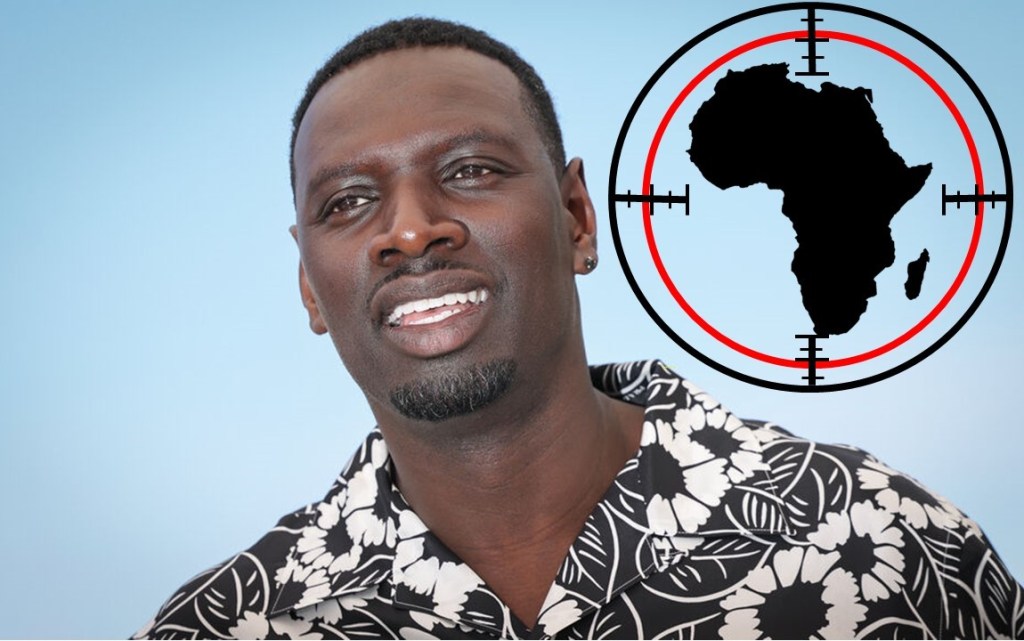
In our first installment of 2023, I want to address the controversy surrounding the interview given by Omar Sy, the French actor of African descent, as he was discussing the Russia-Ukraine war. Omar Sy made his statements during an interview with the French magazine, Le Parisien, while promoting his latest movie, “Les Tirailleurs.” This is particularly relevant to us because the story addresses African history and politics. As a reminder our AfriKili platform focuses on three pillars: Pan-African history, Pan-African politics, and Pan-African business.
I will address the topic in three parts. First, I will summarize the history of the Senegalese Tirailleurs. Second, I will analyze the underlying factors behind the interview controversy. Third, I will propose solutions from AfriKili’s standpoint.
The “Tirailleurs”: Back to history
In the movie, Omar Sy plays the role of a Senegalese Tirailleurs who joined the French army during World War I (1914-1918). Although the movie characters are mostly fictional, the storyline covers another important contribution made by Africans, that is often purposely left out of education curriculums and history books. Therefore, let us uncover the history behind the Tirailleurs, before addressing Omar Sy’s interview controversy.
The word “Tirailleur” is a French noun that can be translated as “rifleman.” The French Army gave this name to indigenous infantry soldiers that were recruited in various French colonies during the 19th and 20th century. The tirailleurs were mostly recruited in West Africa, North Africa, and Indochina.
The first black African Tirailleur Corp was formed in Senegal in 1857, by a decree of Napoleon III. As the Corp grew, the French army started incorporating recruits from various Sub-Saharan African countries into the black African regiments. However, despite their diverse origin, the French kept calling them “Senegalese Tirailleurs,” in reference to the country where the Corp was initially formed. Until their abolition in the 1960s, the Senegalese Tirailleurs fought for France in several colonial campaigns and wars, including World War I and World War II.
Because the French military needed soldiers to shore up its ranks, it often forcefully conscripted young African men into the Senegalese Tirailleurs Corps, by giving them a choice between joining or being executed. As a result, over the Corps’ existence, about 500,000 Senegalese Tirailleurs played key roles in combat victories and tens of thousands died for the French army. Unfortunately, despite their sacrifices, they were denied many rights and were never properly remunerated for their efforts.
The Thiaroye Massacre
The French army went as far as gunning down some Senegalese Tirailleurs who insisted on demanding their remuneration. This occurred during the Thiaroye Massacre of December 1, 1944, at a demobilization camp in Thiaroye, just outside of Dakar in Senegal.
This happened as the Senegalese Tirailleurs were being demobilized by General De Gaulle and sent to transit camps. Before returning to their respective homes, they expected to receive their payments of back pay, war allowances, and demobilization bonuses, just like their French comrades. However, French authorities kept dismissing their complaints and demands. As a result, the Senegalese Tirailleurs protested, demonstrated, and refused to leave the transit camp of Thiaroye until they received the monetary compensation that was due to them. On the morning of December 1, 1944, the French army responded by surrounding the camp with troops, armored cars with machine guns and a tank. The French soldiers opened fire and massacred between 35 and 70 unarmed Senegalese Tiralleurs in cold blood, for refusing to back down from their legitimate demands for payment. The French army would later officially describe the events as an armed mutiny.
Continued denial of rights
Until the start of this year, veteran Senegalese Tirailleurs were still not allowed to receive their military pensions unless they agreed to leave their African countries and relocate to France for at least 6 months every year. For many years, activists launched several initiatives to force the French government to eliminate this requirement, as well as recognize the rights of the veteran Senegalese Tirailleurs and improve their living conditions. The requirement to live 6 months in France every year was finally abolished a few days ago.
It is worth noting that, according to the Office of Veterans Affairs, of the hundreds of thousands of Senegalese Tirailleurs that served the interests of France over the years, only forty are currently listed and the youngest is about 90 years old.
According to Aïssata Seck, the President of the Association for the History and Memory of the Senegalese Tirailleurs, their past efforts are still not recognized by the French government because their disability pensions are still lower than the ones received by other French veterans. What a shame!
The Ukraine War interview controversy
Let us now explore the controversy around Omar Sy’s infamous interview with the magazine Le Parisien. Interestingly, the actor, who plays a rifleman in the movie, is suddenly the target of riflemen shooting a barrage of wild bullets through the media.
In case you missed it, Omar Sy was invited to discuss his new “Tirailleurs” movie. During the interview, the journalist asked him how he felt about the war in Ukraine. He stated:
“A war is humanity sinking, even when it’s on the other side of the world. We remember that man is capable of invading, of attacking civilians, children. We have the impression that we have to wait for Ukraine to realize this. Ah, friends? I’ve seen this since I was little. When it’s far away, we say to ourselves that over there, they are savages, we don’t do that anymore. Like the Covid, at the beginning, we said: it’s only the Chinese.”
Omar Sy, Translation of the original French quote.
He then followed up with a sentence that caused fury across the French society. He stated: “When it is in Africa, are you less affected?”
“When it is in Africa, are you less affected?”
Omar Sy
Contrary to sentiments attributed to him, Omar Sy never questioned the relevance, or the human destruction caused by the Russia-Ukraine war. As a matter of fact, during the interview, he clearly expressed that he was sensitive to atrocities, whether committed Europe, the Middle East or Africa.
If we are being objective, Omar Sy simply pointed to an obvious fact. There has been a blatant lack of coverage of wars that have occurred for years in Africa, despite causing a massive human destruction. He pointed out that the conflicts in Africa have been ongoing for many years, while the conflict in Ukraine is about to complete its first year. Consequently, it is only normal that many Africans do not consider the Russia-Ukraine war deserving of more sympathy or empathy than the wars that have been endured by their families for decades.
Suddenly, Omar Sy’s African roots are brought to the forefront as some sort of impediment. Certain segments of the French society are disputing his authentic “Frenchness.” Other more extreme factions are going as far as requesting that he be returned to his African continent. This is laughable considering that he was born in France, lived all his life in France, and has been the pride of French cinema with globally acclaimed movies.
I have to say that I am not surprised by the level of vitriol aimed at Omar Sy. When it comes to certain geopolitical conflicts and topics, populations are conditioned to accept the narratives advanced by major mainstream media outlets as the only acceptable narratives. Slightly divergent points of view become categorized as deviant. The Russia-Ukraine war is the latest manifestation of this phenomenon.
Still, for a country that prides itself for bringing “The Lumières”—The Lights— to the world and being a beacon of free speech, it is paradoxical that Omar Sy is suddenly painted as a devil and crucified for his statements.
What are the implications?
Beyond the founded or unfounded nature of the criticism thrown at Omar Sy, let’s explore the implications from AfriKili’s standpoint. As a reminder, our platform prides itself in proposing solutions instead of simply accusing or pointing fingers. Our platform does not aim to simply accuse, justify, or defend. We seek to advance.
It is very telling that Omar Sy’s African origin is being used against him. It is as though he committed an unforgivable sin by bringing up African matters and placing them on the same level playing field as European matters. This is another manifestation of the deeply rooted racism that will require continued efforts if we are to eventually eradicate it. I strongly doubt that Omar Sy would have received the same level of criticism, had he been a white French person.
Ultimately, I am convinced that demeaning perceptions about Africa and Africans persist because the continent remains weakly organized and does not project an image of strength to the outside world. Unfortunately, this will not change unless the Pan-African world unifies and organizes itself. The Pan-African world has all the resources to build a better, stronger, and more prosperous Africa.
We need a strong Africa! Strong politically, strong economically, strong culturally.
Omar Sy is right in pointing out that western mainstream media outlets do not cover or elicit support for African conflicts as they do for the Russia-Ukraine war. As a result, Western populations become more desensitized to conflicts happening in Africa.
Even though Omar Sy is right, it is easy to understand the incentives behind the mainstream media outlets. Obviously, CNN, France 24, BBC, Euronews, Fox News, Voice of America (VOA), and the likes, are not African media outlets. They are not funded by African governments or businesses and are not accountable to them. Despite their repeated claims of being independent, the major mainstream media outlets are funded by powerful entities in a global West, that has been the predominant global economic power in recent history. It follows that they will continue pushing certain narratives designed to condition and influence public opinion. Clearly, eliciting public support for their agendas serves their interests. This is generally true in the coverage of international wars and conflicts.
If Pan-Africans want to change the narrative and perceptions about Africa, they need an awakening and they need to urgently organize. Building a stronger and more prosperous Africa will fundamentally change relationships between the Pan-African world and the rest of the world. Only then, can we drastically change the narratives about Africa, but also improve the wellbeing of the entire African continent and its diaspora.
What are the solutions?
To that end, AfriKili will continue organizing to disseminate Pan-African historical knowledge, support Pan-African business initiatives, and drive Pan-African political action.
We believe that intentionally bringing Pan-African history to the forefront is important because it allows the world to learn the real history of the Pan-African world in order to avoid mistakes of the past and build a better future. It is an essential ingredient to annihilate humanity’s negative heritage and upend destructive systems.
We believe that supporting Pan-African business initiatives is important because financial capital is needed to build environments that will allow Africans on the continent and in the diaspora to take control of the Africa’s economic activity, resources, and destiny. The African continent will never maximize its potential without fully controlling its financial resources.
Finally, we believe that driving Pan-African political action is important because politics have tremendous powers to shape our societies by collective action. Through political action, Pan-Africans can take control of the political systems and shape them to fulfil our dream of a thriving African continent, a United States of Africa.
Thank you for reading this blog and, as always, peace be with you. Asante sana!
Let’s get to work.
AfriKili, African Intelligence to build a better, stronger, and more prosperous Africa!

 AfriKili
Leave a comment