
Summary:
- Introduction
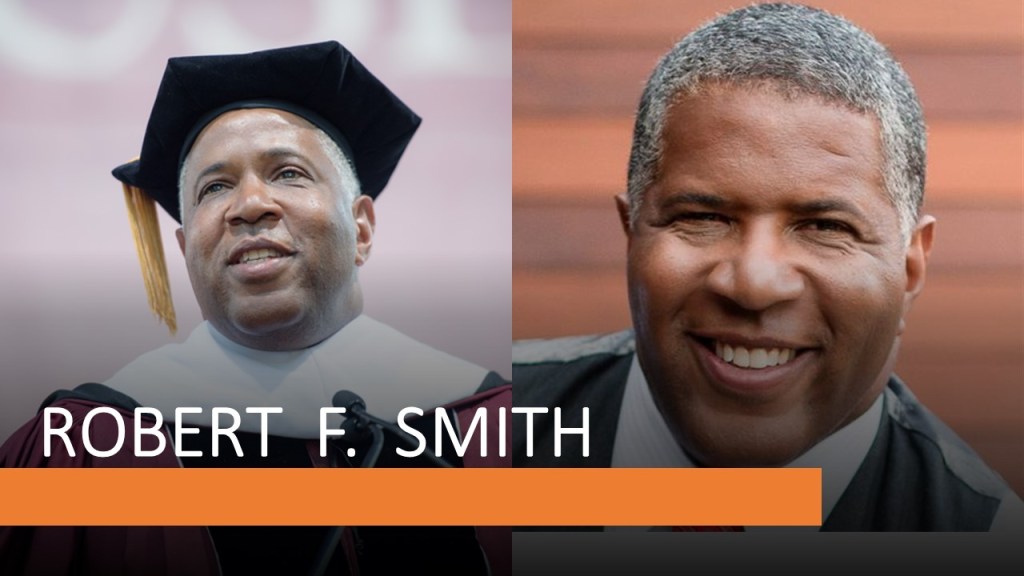
- Who is Robert Smith?
- Is the situation really that bad?
- Why the focus on HBCUs?
- AfriKili’s Stance
- Conclusion
Introduction
Robert Smith, the richest black man in the United States of America, says (I paraphrase):
- 80% of HBCUs—Historically Black Colleges and Universities— are broadband deserts.
- There is a global shortage of software developers.
- Black people face the risk of missing out on the 4th industrial revolution, unless we urgently address the broadband and digital divide in black communities.
What should we make of these three alarming assertions by Robert Smith? Is he right to sound off the alarm, is he overestimating the importance of having access to broadband, or is he being overly dramatic by trying hard to find racial injustice in place where it does not exist? Let’s dive in and take a look.
I came across these statements a couple of weeks ago, while listening to an episode of “The Earn Your Leisure Show” podcast on YouTube, dated December 13, 2022. During this episode, the podcast hosts welcomed Robert Smith to discuss topics including wealth, private equity and Historically Black Colleges and Universities (HBCUs).
Who is Robert Smith?
In case you might not be familiar with Robert Smith, he is the billionaire Founder, Chairman and CEO of the private equity firm, Vista Equity Partners. In 2019, he was also prominently featured in the news for his keynote address at Morehouse College, in front of that year’s graduating class. During the commencement speech, he famously announced that he would pay the student loans for the entire 2019 Morehouse graduating class of about 400 students. The announcement has since turned into the Student Freedom Initiative, that offers income-contingent financial aid education packages and serves several HBCUs.
Robert Smith comes from a family of educators, with both his parents having education doctorates (PhDs). As such, it is not surprising that he directs his philanthropic initiatives towards education and institutions of higher learning.
“Over 60% of African American wealth goes towards servicing student loans.”
Robert Smith, December 2022
Alleviating the student debt burden is also very significant because, according to Robert Smith, over 60% of African American wealth goes towards servicing student loans. It means that 60% of the wealth that could be used to reduce racial economic inequalities is tied to servicing student loans. Instead of being used to generate more wealth by investing or creating businesses, the majority of African American wealth is used to pay off student debt to the United States government. In a country where it is common for students to graduate from university with upwards of $100,000 in student loans, it can take decades for individuals to pay off the debt.
Is the situation really that bad?
Let us now explore the importance of bridging the digital divide gap in black communities and whether Robert Smith is being overly dramatic in highlighting the economic injustice of broadband deserts. I see many possible ways to address this. However, to keep this blog entry brief, I will not analyze the reasons and agenda causing lower broadband access in black communities relative to other communities. Determining whether there is intentional injustice in the deployment of broadband would require extensive research. Rather, I want to focus on Robert Smith’s assertion that addressing the digital divide in HBCUs will help black people combat economic inequalities by creating more opportunities to participate in the digital economy, also known as the 4th industrial revolution. I will conclude by offering suggestions from an AfriKili’s standpoint.
For starters, how bad is the broadband situation with HBCUs? Well, if we are concerned with inequalities, hearing that 80% of HBCUs are broadband deserts should send chills down our spines. This is a very alarming statistic! Whether it is developing entrepreneurial innovation or training software developers, how can we maximize the participation of black people in the digital world when HBCUs do not have the tools to rigorously equip them?
Why the focus on HBCUs?
Some might say that universities are no longer essential to acquire digital knowledge because it can be easily obtained online anywhere with an internet connection. It is true that there is a plethora of courses online and there are cases of self-taught individuals who excel in the digital economy. However, institutions of higher learning remain one of the most efficient and rigorous way of training software developers for professional digital careers.
Others might say that HBCUs are no longer important in educating black students and these students should simply join other universities that have better access to broadband. This sentiment might be supported by the fact that, of the 121 institutions that were operating in the 1930s, there are only about 100 HBCUs currently operating in the United States, representing about 3% of all universities and colleges.
Even though there are few HBCUs, it would be very misguided to discount their importance in providing education and economic mobility opportunities to the black community in the USA. According to a 2019 report by the McKinsey Institute for Black Economic Mobility (BEM) and the McKinsey Global Institute (MGI), 10% of all Black students in U.S. colleges are enrolled at HBCUs, 17% of all bachelor’s degrees and 24% of all STEM (Science, Technology, Engineering and Math)-related bachelor’s degrees earned by black students in the United States were delivered by HBCUs.
Moreover, HBCUs are an important representation of the resourcefulness, resilience, inventiveness, and sense of community for black people who have historically refused to surrender in the face of adversity. Going back to a time when racism and segregation prevented black people from attending colleges and universities in the United States, HBCUs were created to educate them. Since the 1960s, they have played the main role in creating the African American middle class and have educated several prominent public figures. For example, civil rights leader, Martin Luther King Jr., attended Morehouse College in Atlanta, Georgia. Additionally, former United States Supreme Court Justice, Thurgood Marshall, and United States Vice President, Kamala Harris, attended Howard University, in Washington, D.C.
Graduates of HBCUs are 51% more likely to move into a higher-income quintile than graduates of non-HBCUs.
McKinsey Institute for Black Economic Mobility and the McKinsey Global Institute, 2019
It follows that, in a society were obtaining a college education dramatically increase the chances of economic mobility and earning a middle-class income, the wealth gap and economic inequalities between African Americans and white Americans would have been much wider, had it not been for the existence of HBCUs. This is particularly true considering that HBCUs enroll more low-income students than non-HBCU institutions. According to McKinsey BEM and MGI’s report, graduates of HBCUs are 51% more likely to move into a higher-income quintile than graduates of non-HBCUs.
Indeed, the 4th industrial revolution presents tremendous opportunities. Those who are equipped to participate and create solutions to move our societies from the analog world to a digital world are well positioned to create wealth in the long term. Two market trends are particularly relevant. On one hand, the transition to a digital economy is accelerating, while on the other hand, the need for competent software developers is rapidly growing. Consequently, it is unconscionable that 80% of HBCUs that equip so many future black professionals would be broadband deserts.
Ultimately, beside Robert Smith’s personal attachment to institutions of higher learning, he is not misguided in targeting HBCUs for his philanthropic initiatives. Clearly, these institutions are impactful change agents that play a prominent role in providing economic advancement and wealth-creation opportunities to African Americans.
AfriKili’s Stance
From AfriKili’s standpoint, as a platform that works to change both the image and destiny of Africa and its global Pan-African diaspora, we can only commend Robert Smith’s efforts. Economic advancement is one of our pillars and we consider it to be an essential ingredient for Africa and its global diaspora to reclaim their destiny. Historically, African Americans faced many challenges preventing them from fully participating in wealth creation opportunities in the United States. Today, we have the knowledge to correct past injustices and reverse the trend with initiatives such as the one launched by Robert Smith.
Outside the United States, a lot of effort is also needed for black people to participate in the 4th industrial revolution. Data from Computer World shows that black people are underrepresented in the global software developer and technology sectors. For example, in the U.K., black people only represent about 3% of the tech industry. On the African continent, the massive infrastructure gap needs to be addressed in order to expand broadband access and allow increased participation in the 4th industrial revolution. Nevertheless, the continent represents a massive business opportunity for the global Pan-African diaspora. In our AfriKili blog entry from September 9, 2022, we identified the Information and Communications Technology (ICT) sector as one of the most promising industries for doing business in Africa.
Conclusion
Following in the footsteps of Robert Smith, continental Africans and the global Pan-African diaspora are well positioned to invest in equipping the next wave of software developers and digital professionals. Ensuring the participation of black people in the 4th industrial revolution will contribute significantly to creating wealth in the black community and reducing the global racial inequalities. When it’s all said and done, we believe that a more diverse and equitable world is a necessary ingredient to maximize our planet’s potential and maximize the well-being of humanity.
Asante sane. Let’s get to work!
#AfriKili, African Intelligence to change the image and destiny of Africa and its global diaspora.

 AfriKili
Leave a comment