
Summary:
- Introduction
- Should All “Black Lives Matter”?
- The inhumanity is appalling, but not surprising.
- Same racial profiling, regardless of Black origin and ancestry
- Reject ideas of division: we share the same origin
- No Black group is inherently superior to another
- Conclusion
Introduction
I was asked a question that caught me by surprise and almost threw me off. The question was: “should “ALL” Black Lives Matter to “ALL” Black people from different nations and different continents?” In other words, are the destinies of Black people interconnected?
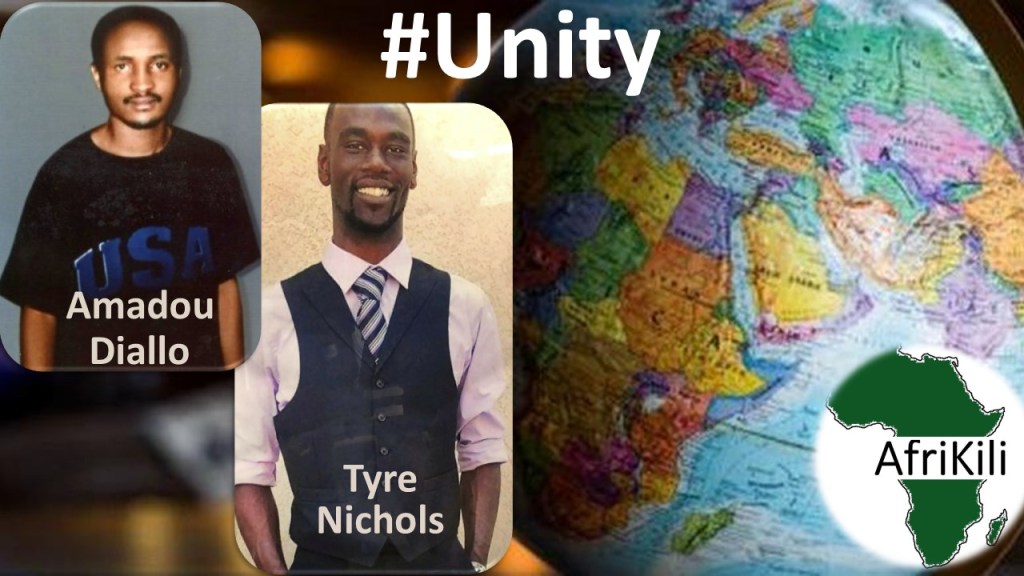
Brother Tyre Nichols was an African American man who was just laid to rest at the beginning of Black History Month, after being savagely murdered by the police in Memphis, Tennessee. May his soul rest in peace. So, should the injustice and murder of African American “Black Lives Matter” to Africans, to Caribbeans and other Black immigrants in the USA? Or, for that matter, should African American Black Lives Matter to Black people around the world? On the flip side, brothers Mamadou Diallo and Patrick Lyoya, were African immigrants that were savagely murdered by the police in New York and in Michigan. May their souls also rest in peace. So, should the injustice and murders of African “Black Lives Matter” to African Americans?
The answers to these questions seem evident to me. However, after further thoughts, I realized that it might be worth peeling off the layers and trying to understand the inspiration behind these types of questions. As we are going through “Black History Month” in the USA, this conversation is particularly important because history can teach us a lot about the collaboration between Black people. Furthermore, this conversation is very important in helping determine how to best advance our cause. No matter where you stand on the issue of unity between Black people of different origins, it is important to gauge how your position helps advance the condition of Black people. After all, this platform is not about accusing and blaming, but advancing. So, let’s fasten our seat belts, let’s dive in, and let’s get to work.
Should All “Black Lives Matter”?
Back to the opening question: should Black Lives Matter? More specifically, should the Black Lives of African Americans, Africans, or Caribbeans Matter to each other? These questions take aim at the very important issues of unity and collaboration between Black people.
Before diving deeper, let me say that unity among Black people might be the most important subject I have tackled since the AfriKili journey begun. I have decided to divide the topic in a 3-part series of articles. In this first article, I will discuss the similar experiences of Black people. Next week, in the second article, we will explore history to uncover what the past teaches us about relationships between Africans and the global Pan-African diaspora. In the third and final article, we will explore how to concretely build coalitions to enhance the collective conditions of Black people.
I know that this subject typically elicits very strong emotions and that some of you will vehemently disagree with me. If that applies to you, I urge you to keep an open mind and get to the end of this article. You might still get relevant information and find value with the content. As they say, “out of the clash of ideas, comes the light.”
I also know that many readers will strongly agree with me. If that applies to you, I would love to hear your comments. Let’s share information and use it to advance our mission which is to build bridges and rebuild the image of Black people in Africa, in the USA, in Europe and the global Pan-African Diaspora. We cannot be satisfied with just talking. We must do everything we can to advance.
The inhumanity is appalling, but not surprising.
Let’s start with the case of our African American brother Tyre Nichols, who was brutally murdered by the police in Memphis, Tennessee, right before the beginning of Black History Month. It is very sobering that he was laid to rest at the start of February, a month that is supposed to be a month-long celebration of the achievements of Black Americans and a recognition of their important contributions to the American history (Check out our previous blog article for more information on the establishment of Black History Month in the USA).
Structural injustices are not just part of a past Black history.
The fact that Tyre Nichols was put to rest at the beginning of February is a stark reminder that structural injustices are not just part of a past Black history. Rather, they are still part of the current Black experience in the USA.
The police officers involved in the vicious beating and murder of Tyre Nichols showed a disgusting level of inhumanity. Sadly, this is not surprising. They are simply the latest manifestation of a police institution that has historically been biased and oppressive against Black and Brown people in America. We need radical change and reforms if we want to make these institutions more just and equitable. However, radical change will not be achieved unless Black people from different origins assemble and create powerful coalitions. There is no other way around it.
Same racial profiling, regardless of Black origin and ancestry
I would have loved to see more prominent Black voices from Africa, the Caribbean, Europe, or South America, use this tragedy to speak up loudly against the murder of Tyre Nichols and the murder of Black men by the police in the USA.
Whether they are African American, continental African, Caribbean, Hispanic, or otherwise, many Black people are similarly profiled by law enforcement.
All Black people in the USA need to understand that, regardless of their ancestry or immigration status, the structurally unjust system will not differentiate their skin color based on their origin. Systems and individuals that have biases against Black people will racially profile them regardless of their origin or descendance. In many cities and neighborhoods across the USA, whether they are African American, continental African, Caribbean, Hispanic, or otherwise, many Black people are similarly profiled by law enforcement, and many suffer cases of “driving while Black” traffic stops.
To prove this point, the names of Amadou Diallo and Patrick Lyoya come to mind. Both individuals were from Africa, and both were murdered by the police while being unarmed. Amadou Diallo was a 23-year-old student from the African country of Guinea, who was killed by 4 officers of the New York City Police on February 04, 1999. The police fired 41 bullets at the unarmed young Black man, with 19 bullets fatally hitting him. The officers claimed to have confused him for rape suspect, a mugger or drug dealer. They were charged with second-degree murder, but later acquitted after a trial. Just like the tragic case of Tyre Nichols, the officers that murdered Amadou Diallo were part of a special Street Crime Unit that has since been disbanded.
The other man, Patrick Lyoya, was a 26-year-old African refugee from the Democratic Republic of Congo who was killed at the end of a traffic stop on April 4, 2022. He was murdered by Christopher Schurr, an officer that had been with the Grand Rapids, Michigan police force for seven years. Patrick Lyoya was unarmed when the police officer shot him in the back of his head.
These 2 examples show that, regardless of their origin, Black people are treated the same way by structurally biased systems, such as the law enforcement system. They face the same risks of being racially profiled, abused, or murdered.
For another relevant anecdote, I would like to recount my personal experience. I have lived and worked in 4 continents: Africa, Europe, North America, and Asia. I can assure you that almost everywhere, our Black skin is exposed to similar biases and racism, regardless of our origin. Just a few years ago, in the USA, a police officer been pulled me over for a traffic stop and I experienced a case of “driving while black.” The police officer cautiously approached my car window and asked for my documents, while his hand was on his gun holster. Seeing that the officer had his hand on his gun, I calmly informed him that I would reach over to the document compartment on the passenger side of the vehicle to retrieve the vehicle insurance. I also informed him that I would reach to the back pocket of my pants to retrieve my wallet and my driver’s license. Throughout this process, the officer kept his hand on his gun and only removed it after I handed him my documents. The officer quickly glanced at the documents and handed them back to me. Almost immediately, he allowed me to drive away without a ticket or warning, telling me that he had stopped me because one of my taillights appeared to be malfunctioning.
In my estimation, this was a clear case of “driving while Black.” I can assure you that during that encounter with law enforcement, my skin color was not differentiated from that of an African American.
Reject ideas of division: we share the same origin
Considering that Black people face the same injustices from biased systems, why should they insist on using their different immediate geographical descendance to reject notions of unity. Instead, that Black people should strive to stand together.
Consequently, within the AfriKili platform, we believe that all Black people in the global Pan-African diaspora are descendants of Africans. Even though, over the last 400 years, Black people have developed different cultures on different continents, they still share many cultural similarities. In fact, there are natural connections that have resisted and persisted the test of time in different Black communities. There are so many examples around the world. You can look at the Garifunas culture in Honduras, music in Cuba and Columbia, voodoo in Haiti. You can look at Brazil, which is the country with the biggest Black population outside of Africa. You will find Black traditional cultures such as the celebrations of the hero Zumbi dos Palmares and Samba. You can even look at places like the Africatown Community, located in Mobile, Alabama, USA.
If they really want to, Black people can overcome their differences and focus on their similarities to form powerful coalitions across the world.
We believe that if they really want to, Black people can overcome their differences and focus on their similarities to form powerful coalitions across the world. Otherwise, it will be very difficult to radically change systems of oppression that started taking form in the 16th century against Black people. These systems are deeply rooted within the internal affairs of certain Western countries, and they still dictate biased international relations between Black nations and the international community. Uprooting and changing these systems is similar to performing root canals on our societies. Knowing how painful root canals can be, we should realize that it will not be done without unity and collaboration.
“Uprooting and changing these systems is similar to performing root canals on our societies.”
The global Pan-African diaspora is very diverse and has acquired high-level skillsets in all industries and all sectors. Imagine the impact that could be achieved by intentionally bringing together Black people from different nationalities under broad Pan-African coalitions. That would create the most powerful force the world has ever seen. Such a coalition would play an influential role in changing the image and reclaiming the destiny of Black people in Africa, in the USA, in the Caribbean and the entire global Pan-African diaspora.
No Black group is inherently superior to another
Unfortunately, there are those in different Black communities that still refuse to see similarities between them, despite facing the same injustices. Some go as far as rejecting their common descendance from Africa, as a way of advancing their ideas for separation or their perceived superiority.
One of the areas where we need to reject the idea of superiority is formal education in the USA, particularly college degrees. Within immigrant communities, I sometimes hear the argument that Black immigrants are better and smarter than African Americans because they get college degrees at a higher rate.
To be clear, I do not believe that any group of people is inherently superior to another. There are good apples and bad apples in every population. But also, I find the education argument to be ridiculous and misguided.
For one, a college education is not the ultimate measure of one’s intelligence and ability. But, more importantly, interpreting statistics without understanding the context can be dangerous and misleading. It is true that, according to statistics, Black immigrants in the USA obtain college degrees at a higher rate than U.S.-born Black Americans. This is particularly true of Black immigrants from sub-Saharan Africa. But, make no mistake, this does not mean that African immigrant are better or more intelligent than African Americans.
Let’s look at some recent numbers from the U.S. Census Bureau. The data show that, in 2021, 28.1 percent (%) of African Americans over the age of 25 in the United States had earned at least a bachelor’s degree, with Black women holding a lead over Black men in professional fields such as law, medicine, dentistry, etc.
In contrast, 31 percent (%) of Black immigrants over the age of 25 had at least a bachelor’s degree.
Both the numbers for African Americans and Black immigrants have grown in recent years, but they are still much lower that the White population. According to the same U.S. Census Bureau data, in 2021, 41.7 percent (%) of non-Hispanic White Americans over the age of 25 in the USA had at least a bachelor’s degree.
So, how can we explain that a higher rate of Black immigrants in the USA obtain college degrees compared to African Americans? There are several factors, but I would like to highlight two of them. First, just like other ethnic groups, most Black people that emigrate to the USA from Africa, the Caribbean, Europe, or South America, leave their countries of origin with immense family and economic incentives to excel. They are conditioned to see the USA as the ultimate destination to find better professional, educational, and economic opportunities for themselves and their families. A second factor is the migratory patterns of African immigrants to the U.S. Typically, Africans with a college education migrate to the U.S. at a higher rate than those with less education.
Clearly, the higher rate of college degree holder in the Black immigrant community has to do with the population sample that immigrates in the USA. It would be a very different story if you looked at the entire populations in the countries where the Black immigrants originated. Many of these countries in Africa, the Caribbean and South America have higher illiteracy rates and lower rates of college degree holders.
As I previously stated, I do not believe that a college degree is the ultimate indicator of a person’s intelligence, success, or ability. There are millions of people that are brilliant and successful without a college degree.
“We need to stop wasting time focusing on our differences, and instead, work together to ensure that Black people are not left behind.”
At the same time, many societies have created systems in which obtaining a college degree dramatically increase the chances of earning a higher middle-class income. We also saw that regardless of their origins, Black people have lower educational attainment compared to other ethnicities when it comes to college degrees. Consequently, given the high premium our societies place on college degrees, we need to stop wasting time focusing on our differences, and instead, work together to ensure that Black people are not left behind.
There is strength in numbers, and it would be more beneficial to work together towards reversing the trend. Like the saying goes, “a three-cord strand will always be stronger than a single-cord strand.” It is undeniable that we are stronger in unity. Let’s work together to raise the tide for all Black people.
Insisting that Black immigrants in the USA are better than African Americans because of their statistical achievements, would be as misguided as Caribbean, European, or U.S.-born “Blaxiters” insisting that they are better than continental Africans because of their high achievements. The reasons for the success of Blaxiters in Africa are very similar to the reasons for the success of Black immigrants in the USA. They can be explained by the migratory patterns and the population sample of Blaxiters. They typically achieve a level of financial stability allowing them to absorb the initial financial shock of emigrating to Africa. Arriving in Africa with U.S. dollars and other western currencies allows them to have higher spending power than most locals. This gives them access to many opportunities that are harder for locals to seize given their financial shortcomings.
For more context on the “Blaxit” Movement, we saw in our previous 3-part series that it is the growing trend of people of African descent leaving the USA and other Western countries to emigrate to Africa. We also saw that the term Blaxit is a combination of the terms “Black” and “Exit”, emulating the term “Brexit” that describes the British Exit from the European Union. The term Blaxit was coined by Dr. Ulysses Burley III, an academic, journalist, and human rights consultant.
Black people do not have any inherent deficiencies preventing them from succeeding.
Whether it’s the success Blaxiters in African or Black immigrants in the USA, it is clear that Black people do not have any inherent deficiencies preventing them from succeeding. They are as capable as any other ethnic group. However, it is true that Black people are still negatively impacted by oppressive systems that are a historical heritage of slavery and colonialism in their native countries. These oppressive systems inhibit the success of natives in both the USA and Africa, but they are not as effective in restraining immigrants. They arrive in their new countries with different societal paradigms, and they are better equipped to seize opportunities that natives are not able to seize.
Therefore, whether in the USA, Africa, the Caribbean, Europe, or other regions in the world, Black people would benefit immensely by creating coalitions composed of a mix of Black natives and Black immigrants. Their diverse paradigms are very complementary and can become a great asset in the fight to elevate the condition of all Black people around the world. This is much more productive than constantly focusing on their geographical differences and immediate descendance.
Conclusion
As I tried demonstrating through this article, Black people can force systems of structural injustice to radically changes and they can perform painful root canals on society. However, they must decide to stand together and form coalitions in their respective locations. Only then, can they uproot systems that started taking form 400 hundred years ago by inventing human races based on skin color and by establishing rules that created biases against Black people.
“I believe that all men, black and brown and white, are brothers.”
W.E.B. Du Bois
I share W.E.B Du Bois’ belief, when he said, “I believe that all men, black and brown and white, are brothers… and alike in soul and the possibility of infinite development.” The problems are the rotten systems that were setup by White men before you and I were born. Systems that subjugated Black and Brown people for the benefit of White people. Systems that started taking form when Europe went through its industrial revolution and White Europeans started developing weapons to conquer other continents. We still experience the injustices of these systems, and we need to radically change them.
But, if we want to do it, it starts with three things. First, it starts with knowing thyself. Like brother Bob Marley said in his iconic song, Buffalo Soldier, “if you know your history, you would know where you’re coming from, and you wouldn’t ask me who the hell I think I am.” Second, it starts with accepting and loving thyself, as Frantz Fanon suggested in his book “Black Skin, White Masks.” Third and more importantly, it starts with loving and believing in each other. We must unite!
In his famous 2004 speech that announced him to the world, Brother Barak Obama said, “e pluribus unum,” meaning “out of many, one!” In his acclaimed 1963 book, Kwame Nkrumah, one of the greatest Pan-Africanists and one of the leaders of the African independence movement, said “Africa Must Unite!” Today, I humbly say, “Black People must unite” and when they do, they will create the mightiest force the world has ever seen. Unity.
In our next installment, part 2 of our 3-part series, we will see that there’s a very deep history of African Americans, Caribbeans, and continental Africans fighting together to advance the cause of Black people. We will see how heavy hitters like Marcus Garvey, W.E.B. DuBois, Kwame Nkrumah, Malcom X, Walter Rodney, and even Martin Luther King were advocating for strong collaborations between Africans and people of African descent.
In the third and final entry of this series, we will explore concrete ways to unite, build and strengthen coalitions to advance the cause of all Black people. We will see how to strive for excellence regardless of our location, because we have greatness in us. We have AfriKili in our DNA (African Intelligence).
Are the destinies of Black people interconnected and should all Black Lives Matter to Black people from different nations and different continents? My answer is yes, absolutely!
Thank you and until next time, peace be with you!
#AfriKili, African Intelligence to build bridges and change the image of Black people for a more equitable world.
 AfriKili
Leave a comment