
Summary:
- Introduction:
- Historical Context: Unpacking the Connection with Education
- The Negative Role of Education in the Wealth Gap
- The Vicious Cycle from Education to Poverty
- Solutions
- A Special Focus on HBCUs
- Conclusion
- Let’s get inspired: James Baldwin
Jambo, AfriKili and Global PAC nation!
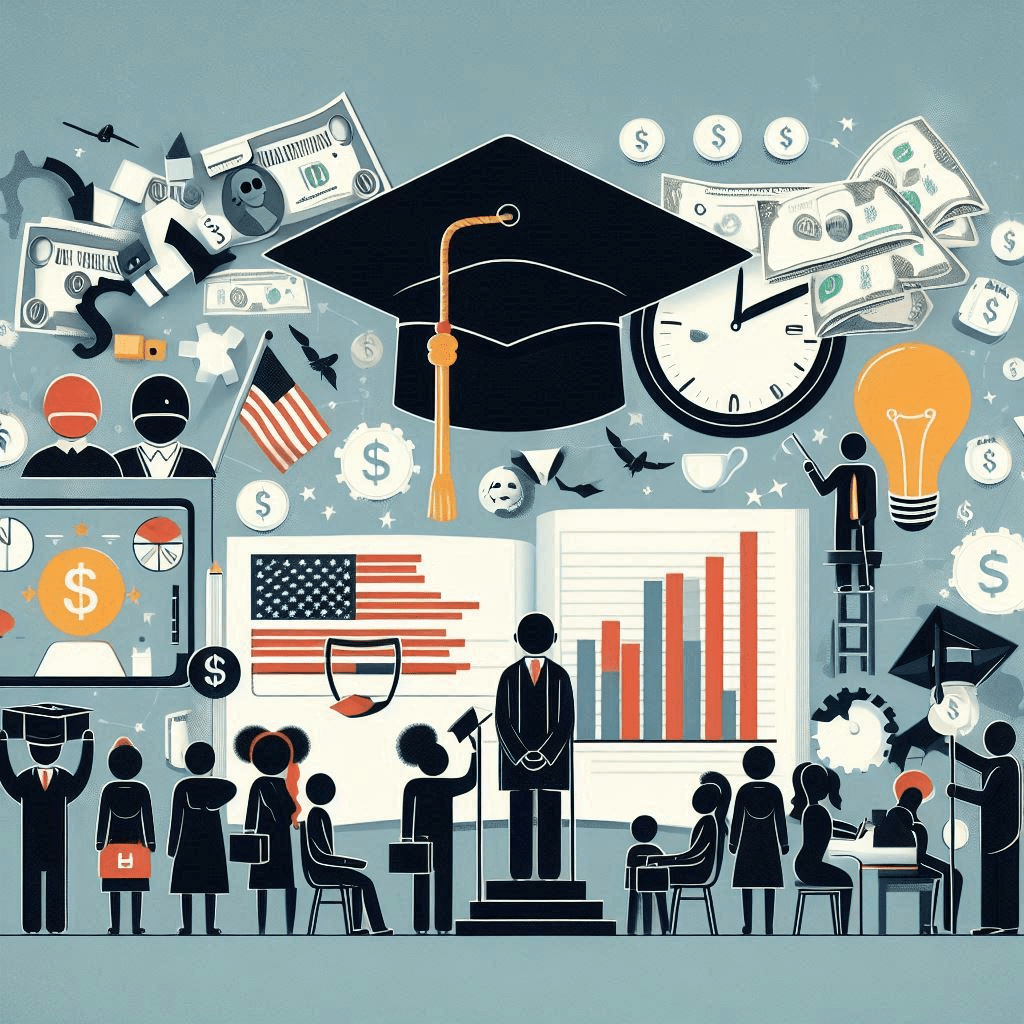
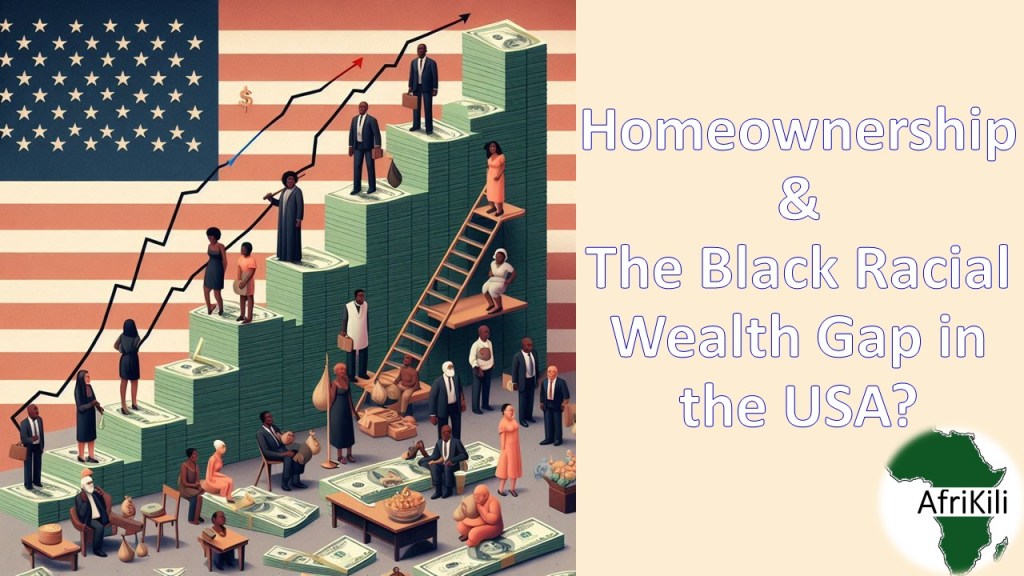
In the first installment of our 3-part series discussing the racial wealth gap between Black and White households in the United States, we explored the impact of homeownership. We also established that the racial wealth gap is a persistent and complex issue that has deep historical roots and modern-day implications. In this installment, which is part 2 of the series, we will discuss how education is one of the most significant factors contributing to the wealth gap by highlighting the disparity in access to quality education and the resulting differences in educational outcomes.
Understanding the link between the Black racial wealth gap and education is crucial in addressing the economic inequalities that continue to affect millions of Black Americans today.
Historical Context: Unpacking the Connection with Education
The racial wealth gap did not emerge overnight; it is the product of centuries of systemic racism and discriminatory policies. The legacy of slavery, Jim Crow laws, Redlining, and segregation has left Black Americans with fewer opportunities to accumulate wealth compared to their White counterparts. Education, which is often seen as a pathway to economic mobility, has also been historically denied or limited for Black Americans.
During the era of slavery, Black people were prohibited from learning to read or write. After the Civil War, during Reconstruction, some progress was made in establishing schools for Black children, but these efforts were met with violent resistance and underfunding. The Plessy v. Ferguson decision in 1896, which established the doctrine of “separate but equal,” created more educational disparities by allowing the existence of segregated schools, which were anything but equal. Schools that were educating Black students were consistently underfunded and lacked the resources necessary to provide a quality education.
The legacy of these systemic injustices continues to impact Black families today, creating a cycle of poverty that is difficult to break.
The Negative Role of Education in the Wealth Gap
Education is one of the most important factors that influence an individual’s ability to build wealth. Higher levels of education are generally associated with a higher earning potential, better job opportunities, and increased financial stability.
“Education is one of the most important factors that influence an individual’s ability to build wealth.”
Unfortunately, there are several educational disparities between Black and White Americans that are creating significant barriers in accessing quality education and contribute to the racial wealth gap. Let’s explore four (4) of these disparities.
1. Access to Quality Education
The quality of education available to Black students is often lower than that available to White students. Black students are more likely to attend underfunded schools with fewer resources, larger class sizes, less experienced teachers, and limited access to advanced coursework. Furthermore, the disparity in the quality of education impacts academic performance while also limiting opportunities for higher education and well-paying jobs. Ultimately, the disparity in educational access and outcomes is a significant factor in the racial wealth gap.
2. College Enrollment and Graduation Rates
Even when Black students attend college, they face several barriers that can impact their ability to graduate. Financial constraints, lack of social support, and racial discrimination on college campuses can lead to lower graduation rates. According to the National Center for Education Statistics, the six-year graduation rate for Black students in 2018 was only 40%, compared to 64% for White students. This disparity in higher education attainment directly affects earning potential and wealth accumulation.
3. Student Loan Debt
The cost of higher education is another critical factor because, for many Black students, the dream of obtaining a college degree comes with the burden of student loan debt. Black students are more likely to take on significant student loans to finance their education, leading to higher levels of debt upon graduation, compared to their white peers.
This debt burden can delay wealth accumulation, as graduates must prioritize loan repayment over saving for a home or investing in other wealth-building opportunities. For example, it is estimated that over 60% of African American wealth goes towards servicing student loans. This means that 60% of the wealth that could be used to reduce racial economic inequalities is tied to servicing student loans.
“it is estimated that over 60% of African American wealth goes towards servicing student loans.”
The implications are significant because most of the African American wealth is used to pay off student debt instead of being used to generate more wealth by investing or creating businesses. Considering that students often graduate from American university with upwards of $100,000 in student loans, it can take decades for individuals to pay off the debt.
4. Employment Discrimination
Even upon successfully completing their college education and obtaining a college degree, Black Americans often face discrimination in the job market. Studies have shown that resumes with traditionally Black-sounding names receive fewer callbacks than those with White-sounding names, even when qualifications are identical. This discrimination can lead to lower wages and fewer opportunities for career advancement, making it more difficult for Black individuals to accumulate wealth. This is evident, considering that Black households headed by someone with a college degree have less wealth than White households led by someone with only a high school diploma.
The Vicious Cycle from Education to Poverty
The link between the racial wealth gap and education can be a vicious cycle. Black families with lower wealth are less able to afford quality education for their children, which in turn limits their children’s ability to achieve financial stability and build wealth as adults. The educational disparities also means that Black Americans with lower levels of education are more likely to be employed in low-wage jobs with limited opportunities for advancement, and limited abilities to save or invest.
Considering that education is a key determinant of income, and income is a primary driver of wealth accumulation, the cycle of educational disparities has a profound negative economic impact against Black people. Not only does it contribute to the current overall wealth gap, but it could perpetuate the racial wealth gap across generations if left unchecked.
Addressing the link between education and the racial wealth gap is essential and will require comprehensive policy changes specifically targeting educational disparities.
This includes increasing funding for schools in predominantly Black communities and underserved communities, expanding access to higher education through scholarships and grants, and implementing policies that reduce the burden of student debt. Additionally, addressing broader systemic issues such as housing discrimination and employment disparities is crucial for creating a more equitable society.
Any solution for eliminating educational disparities at the collegiate level and for helping narrow the racial wealth gap should place a particular focus on HBCU’s—Historically Black Colleges and Universities—that are not only well positioned within the African American communities but were established to specifically address the educational disparities at a time when Black people were prevented from attending colleges and universities in the United States.
Since the 1960s, HBCUs have been essential in creating the African American middle class and have educated several prominent public figures. For example, the civil rights leader, Martin Luther King Jr., attended Morehouse College in Atlanta, Georgia, and the United States Vice President and current nominee of the democratic party to become the 48th President of the USA, Kamala Harris, attended Howard University, in Washington, D.C.
Undoubtedly, over the years, HBCUs have played a critical role in providing education and economic mobility opportunities to African Americans. For example, according to a 2019 report by the McKinsey Institute for Black Economic Mobility (BEM) and the McKinsey Global Institute (MGI), HBCU’s enroll about 10% of all Black students in U.S. colleges, HBCUs deliver 17% of all bachelor’s degrees earned by black students, and 24% of all STEM—Science, Technology, Engineering and Math—bachelor’s degrees earned by black students in the United States were delivered by HBCUs. Additionally, HBCU graduates are 51% more likely to move into higher income brackets than their non-HBCU peers.
Graduates of HBCUs are 51% more likely to move into a higher-income quintile than graduates of non-HBCUs.
McKinsey Institute for Black Economic Mobility and the McKinsey Global Institute, 2019
9In the U.S. society, were obtaining a college education dramatically increase the chances of economic mobility and earning a middle-class income, the wealth gap and economic inequalities between African Americans and White Americans would have been much wider, had it not been for the existence of HBCUs. Consequently, even though they currently represent only about 3% of all U.S. colleges, HBCUs remain essential for training professionals within the black community and for addressing educational disparities at the collegiate level for the overall African American community.
Conclusion
As we have discussed in this article, the Black racial wealth gap in the United States of America is a multifaceted issue with roots in historical injustices and ongoing systemic inequalities. Additionally, the link between the Black racial wealth gap and education is clear, considering that educational disparities, both in terms of access and quality, play a significant role in perpetuating the wealth gap. Consequently, by addressing these disparities and implementing policies that promote educational equity, we can take meaningful steps toward closing the Black racial wealth gap and creating a more just and inclusive society for all.
Let’s Get Inspired
I will close with a quote from James Baldwin (1924 – 1987), the influential American writer, orator and civil rights activist who was famous for his essays, novels, plays, and poems during the civil rights movement in the United States: “Not everything that is faced can be changed, but nothing can be changed until it is faced.”
“Not everything that is faced can be changed, but nothing can be changed until it is faced.”
― James Baldwin
#AfriKili and Global PAC nation, even though we will not solve all issues impacting global pan-African communities, we can become powerful agents of change by uniting. Let us associate and build bridges in order to create powerful coalitions that will span continents and generations.
Until next time, peace be with you. Asante Sana!
Let’s get to work!
AfriKili
African Intelligence to Build Bridges in Africa and The Global Pan-African Diaspora! *** Intelligence Africaine pour Construire des Ponts en Afrique et la Diaspora Pan-Africaine Mondiale ! *** Akili ya Kiafrika wa Kujenga Madaraja barani Afrika na Diaspora ya Kimataifa ya Pan-Afrika!
 AfriKili
Leave a comment